I’ve been thinking about how quickly we call things “wasted.”
- A job that didn’t fit.
- A relationship that taught you the hard way.
- A creative project that didn’t land.
- A season of ignoring your health until your body forces the conversation.
We label it wasted time because that’s the easiest way to explain the pain: *If it was wasted, then at least it had a category. *But I don’t think most of it is wasted. I think most of it is information - earned the expensive way.
Here’s the line I’m trying to live by lately:
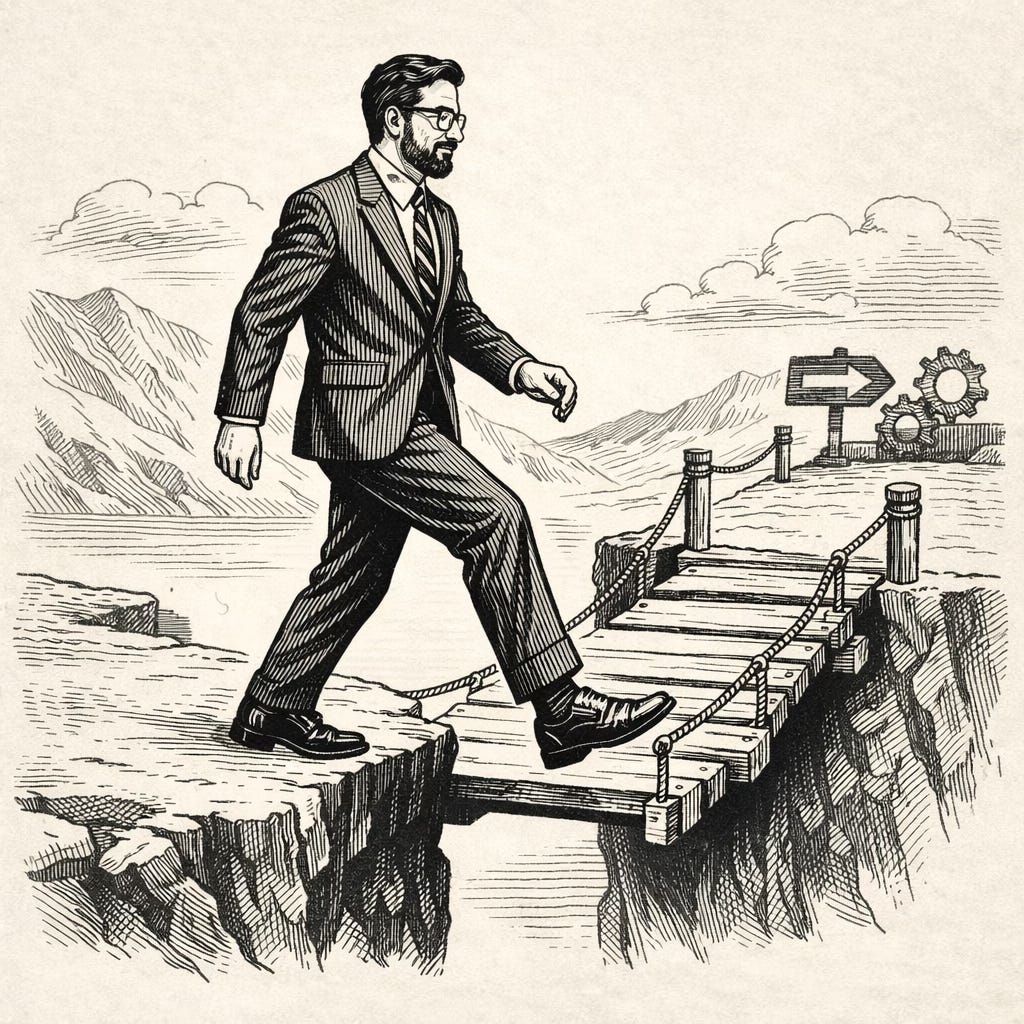
Don’t think of it as wasted, just what not to do again. Every misstep is the push in the right direction.
Not because mistakes are good. But because they can be useful - if you stop turning them into a verdict on who you are.
The job you take when you’re desperate to leave
One of my clearest “misstep” moments was taking a new job even though I knew, deep down, it wasn’t a great situation.
I didn’t take it because it was right.I took it because I was unhappy, stuck, and desperate for movement. That’s a kind of survival decision a lot of us make: *anything is better than this. *And sometimes that’s true. But sometimes it’s just a lateral move into a different kind of stress. What that job taught me wasn’t “you’re bad at choosing.”It taught me something more specific - and more helpful:
- When I’m stuck, I’m vulnerable to relief disguised as opportunity.
- That’s not shame. That’s a pattern.
- And once you can name a pattern, you can interrupt it.
The moment you don’t speak up, even though you were hired as the expert
Another misstep looks quieter from the outside, but it sticks to the ribs. Being hired because you’re an expert - then not standing up for what you know is right. I’ve done that too. Not because I didn’t care.
- Because sometimes it’s easier to let a bad decision happen than to risk friction.
- Because I didn’t want to be “difficult.”Because I didn’t want to be the only one pushing.
- But here’s the thing: in design (and in life), silence isn’t neutral. Silence is a choice that has outcomes.
That misstep taught me this:
If I don’t advocate for what’s right when it matters, I end up carrying two problems:
- the consequences of the decision, and
- the weight of knowing I abandoned my own standards.
The lesson wasn’t “always fight.” The lesson was “pick the moments that matter - and show up fully in them.”
The UX version: building before you understand the user
This one might be the most universal. Building an app - or any product - without fully understanding the user’s real problem or need. It’s so easy to do. Especially when you’re capable. Especially when you have ideas. Especially when building feels like progress. But UX has this brutal honesty built into it: the user doesn’t care how much work you did. They care whether it helps. I’ve learned that “shipping” isn’t the same as “solving.” That misstep taught me something I now treat like a design principle and a life principle:
- Don’t fall in love with your solution before you’ve sat with the problem.
- Because when you skip discovery, you don’t avoid uncertainty - you just push it downstream where it becomes more expensive.
And then there’s health - the misstep you can’t outsource
Health has a way of humbling every other area.
- In career, you can pivot.
- In relationships, you can repair.
- In creative work, you can restart.
But with health, the bill eventually comes due - and it’s paid in energy, mood, clarity, and time. For me, health has been a “big one,” because it’s not just a category of life. It’s the platform everything else runs on.
When I ignore it, everything degrades:
- my patience gets thinner
- my confidence gets shakier
- my decision-making gets louder and messier
- my creativity gets foggier
So I’m trying to reframe that too - not with guilt, but with honesty. Not “I should’ve been perfect.” More like: **my body was giving feedback and I didn’t listen early enough. **That’s still painful. But it’s actionable.
The reframe that actually helps
Here’s what I’ve noticed: A lot of regret comes from asking the wrong question.
We ask:
“Why did I do that?” (as if the answer will punish us into improvement)
But a better question is:
“What is this teaching me not to repeat?”
That’s how you turn a misstep into direction instead of a life sentence.
A tiny practice that keeps me honest
When something goes wrong, I write three lines:
- What did I think would happen?
- What actually happened?
- What will I do differently next time? (one specific behavior, not a personality trait)
Not “I’ll be better.”
Not “I’ll stop being me.”
Just one real adjustment. Because the goal isn’t to erase mistakes. The goal is to stop paying for the same lesson twice.
Closing
If you’re carrying a misstep right now - career, relationship, creative work, health - try not to call it wasted.
Call it what it is: evidence. feedback. direction.
You don’t have to love what happened. You just have to let it make you wiser.
Don’t think of it as wasted time, just what not to do again. Every misstep is the push in the right direction.
Originally published on Substack.