
Overview
The City of Charlotte has been operating an internal case management system for its police force for over two decades. This essential system serves as an integral part of the city's law enforcement infrastructure, capturing a wide array of incidents ranging from 911 emergency calls to non-emergency situations and patrol stops. It meticulously tracks each incident from the initial reporting stage through the investigation phase, all the way until the cases are handed over to the court system. The system technologically out dated and does not leverage modern day convenience making it cumbersome to enter vital information realtime, which is essential in police work.
On a monthly basis, the system handles an impressive average of more than 10,000 incidents. Its capabilities are not limited to aiding police officers alone; it also provides essential support to various other key roles within the law enforcement ecosystem. This includes crime scene investigators, forensic experts, detectives, and even the District Attorney's office.
One of the standout features of this system is its comprehensive reporting capabilities. It plays a crucial role in compiling and submitting crime statistics to the Federal Government, ensuring that data is accurate, timely, and compliant with federal requirements. This not only aids in policy formulation and resource allocation at the federal level but also helps the city gain insights into crime patterns, thereby enabling more effective local law enforcement strategies.
Overall, the system serves as a cornerstone for the City of Charlotte's law enforcement activities, streamlining operations, enhancing inter-departmental collaboration, and contributing to both local and national crime analytics. In 2021, the City of Charlotte decided to update and modernize the system to make it simpler use and more effective.
My Role
I was retained as Lead UX Designer for this multi-year project.
User Research: Led in-depth interviews, ride-alongs with officers, and surveys to gather comprehensive user insights.Feedback Synthesis: Analyzed and distilled user feedback to guide my design strategy.
Design Creation: Developed design mockups and a components library to ensure a consistent and efficient user experience.
User Feedback and Testing: Managed both moderated and unmoderated testing sessions, along with survey feedback, to refine and validate the designs.By spearheading these key areas, I played a pivotal role in ensuring the project's success, delivering a user-centric and operationally efficient case management system.
Software Tools Used
Figma for designing the screens and components
Airtable for databasing the custom dynamic form generator script I developed.
JIRA for project and story/task tracking
UserTesting.com for unmoderated feedback
Process
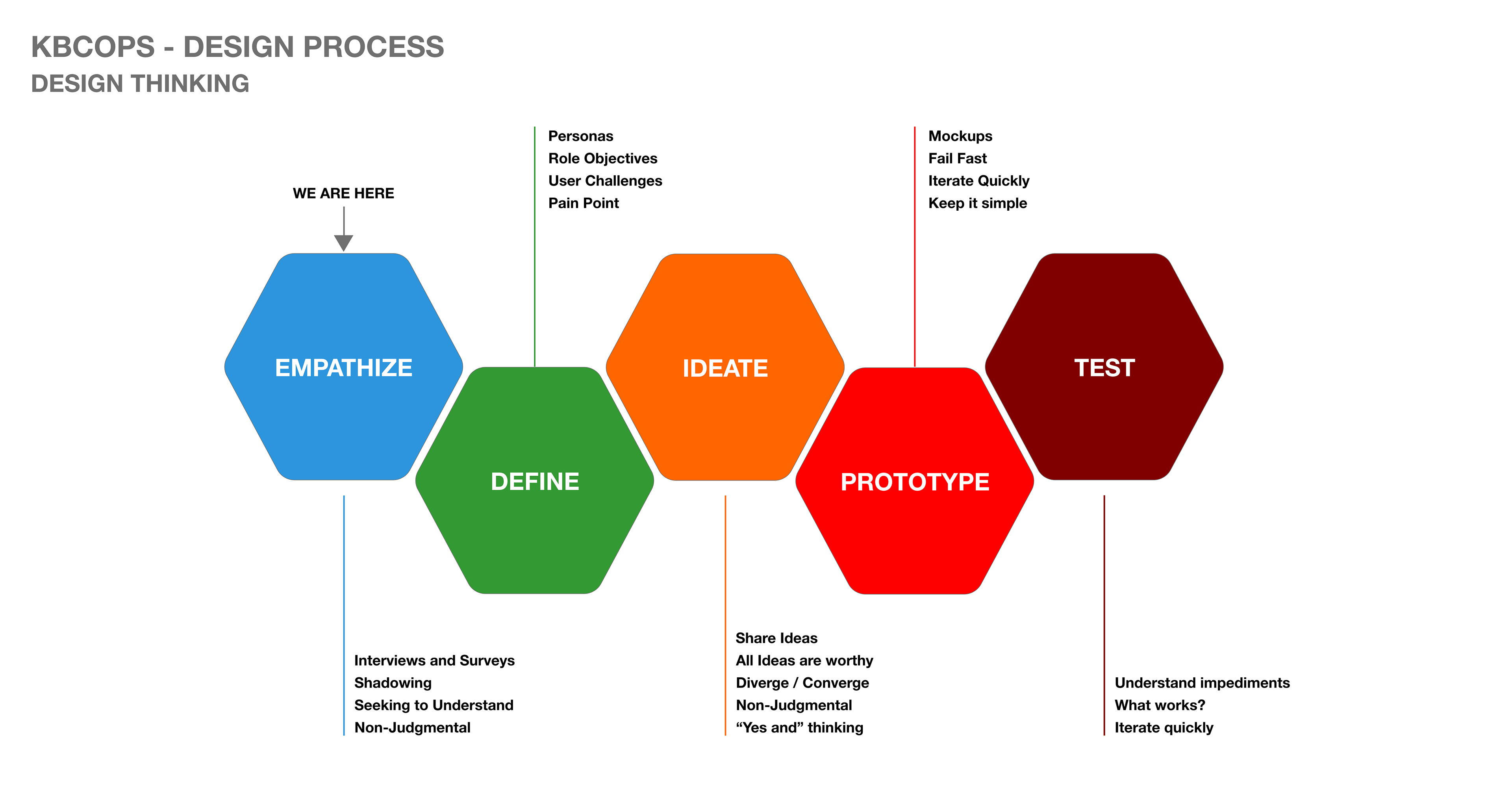
I was brought on board at the initial stage of the project to implement the Design Thinking methodology, a user-centric approach that fosters creative problem-solving. This methodology was particularly beneficial, as it allowed us to delve deeply into understanding the specific problems and challenges our target users face.
The process began with the Empathy phase, where we engaged directly with users to gather qualitative insights. This was followed by the Define stage, where we synthesized these insights into actionable problem statements. In the Ideation phase, we brainstormed a wide range of potential solutions, which led us to the Prototyping stage. Here, we developed low-fidelity models to visualize and test our ideas. Finally, we moved to the Testing phase, where we collected user feedback on our prototypes.
To ensure that the team was aligned and well-versed in the Design Thinking approach, I created a comprehensive visual guide. This served as a valuable resource for everyone, especially those who were new to the methodology, enabling us to work cohesively and make informed decisions throughout the project lifecycle.
Research
To gain a comprehensive understanding of the user experience with the City of Charlotte's internal case management system, I undertook a multi-faceted research approach that included panel interviews, surveys, and ride-alongs with various officers.
The panel interviews involved structured conversations with key stakeholders, such as police officers, crime scene investigators, forensic experts, detectives, and members of the District Attorney's office. These interviews provided valuable qualitative insights into the existing system's strengths and weaknesses from the perspectives of those who interact with it on a daily basis.
Complementing the interviews, I administered surveys to a broader range of users to gather quantitative data. The surveys focused on specific functionalities of the system, ease of use, and areas for improvement. This allowed me to identify common trends and pain points, which were crucial for understanding the overall user satisfaction and areas that require attention.
The ride-alongs offered an unparalleled, real-time view of how the system is utilized in the field. By observing different officers during their shifts, I was able to see firsthand the challenges they face, from data entry under time-sensitive conditions to accessing crucial information while on the move. This immersive experience provided me with a deeper level of empathy for the users and a nuanced understanding of the operational constraints and necessities they deal with regularly.
Collectively, these research methods not only enriched my understanding of the user experience but also highlighted the critical issues that needed to be addressed for future system enhancements.
To foster innovation and encourage the team to think beyond the limitations of the current system, I employed the "How Might We" (HMW) methodology. This approach involves framing challenges as open-ended questions, such as "How might we make data entry more efficient?" or "How might we simplify report generation for officers?" By doing so, it opens up a realm of possibilities and encourages creative problem-solving.
Involving the team in the design process is crucial for the project's success. By giving them a voice and incorporating their feedback, we can ensure that the redesigned system will not only meet but exceed user expectations. This collaborative approach also fosters a sense of ownership among team members, making them more invested in the project's outcome.
Key Objectives
Upon completing the research phase, I synthesized the gathered data to formulate a strategic course of action for enhancing the case management system. My initial design focus was honed-in on three key areas:
1. Simplify and Improve Data Entry: One of the major pain points identified was the cumbersome data entry process. My designs aim to streamline this by reducing the number of steps, implementing intuitive forms, and incorporating auto-fill features where possible. This will not only save time but also minimize the likelihood of errors.
2. Improve Report and Case Management for Officers: Officers often struggle with managing multiple cases and reports simultaneously. My designs introduce features like a dashboard overview, real-time updates, and easy-to-navigate case folders. This will enable officers to manage their workload more efficiently and access vital information quickly.
3. Create Consistent UX Patterns: Inconsistency in the user interface was another issue that came to light during the research. The design establishes a uniform set of UX patterns, including consistent navigation, layout, and interaction elements. This will improve the overall user experience and make the application easier to use.
Challenges
Navigating the redesign of the City of Charlotte's internal case management system presented a unique set of challenges, each requiring a tailored approach to overcome:
1.User Feedback Constraints: Many users offered feedback that was either complacent, like "I think this works fine," or disengaged, such as "I'm going to retire in 2 years; I don't really care." To address this, I employed targeted questioning and scenario-based inquiries to elicit more actionable insights. This helped in uncovering latent needs and preferences that users may not have initially expressed.
2. Device Variability Among Officers: Police officers often switch between different vehicles and desktop computers, making it difficult to use cookies for storing personal settings. To tackle this, I explored and implemented cloud-based solutions that would allow officers to access their personalized settings from any device through secure login credentials.
3. Backend Limitations: The new system had to run concurrently with the existing one, limiting the ability to make backend changes. This made it challenging to introduce innovative UX patterns. To work around this, I focused on frontend improvements that could be implemented without altering the existing data storage and retrieval mechanisms. Further updates overcoming this limitation are possible but require require additional municipal approvals.
4. Overhaul of 300+ Forms: The system includes an extensive array of over 300 individual forms, each of which needed a complete redesign. To efficiently handle this sizable undertaking, I employed a modular design strategy. By identifying and standardizing common elements across all forms, I was able to create a unified user experience, while also streamlining the design and development process. To further expedite the redesign, I developed an automated Figma script that could read JSON form data from the existing system and construct the forms in accordance with the design guidelines. This innovative approach significantly reduced manual design effort, ensured consistency across all forms and importantly saved months of manual work.
5. Complex Business Rules: Many forms in the system are governed by intricate business logic, including triggers and conditional required fields. Understanding these rules was crucial for the redesign. I collaborated closely with subject matter experts and system architects to ensure that the new design would accommodate these complexities without compromising user experience.
By systematically addressing each of these challenges, I was able to devise solutions that were both innovative and practical. This balanced approach ensured that the redesigned case management system would meet the diverse needs of its users while adhering to the technical and operational constraints of the project.
Design
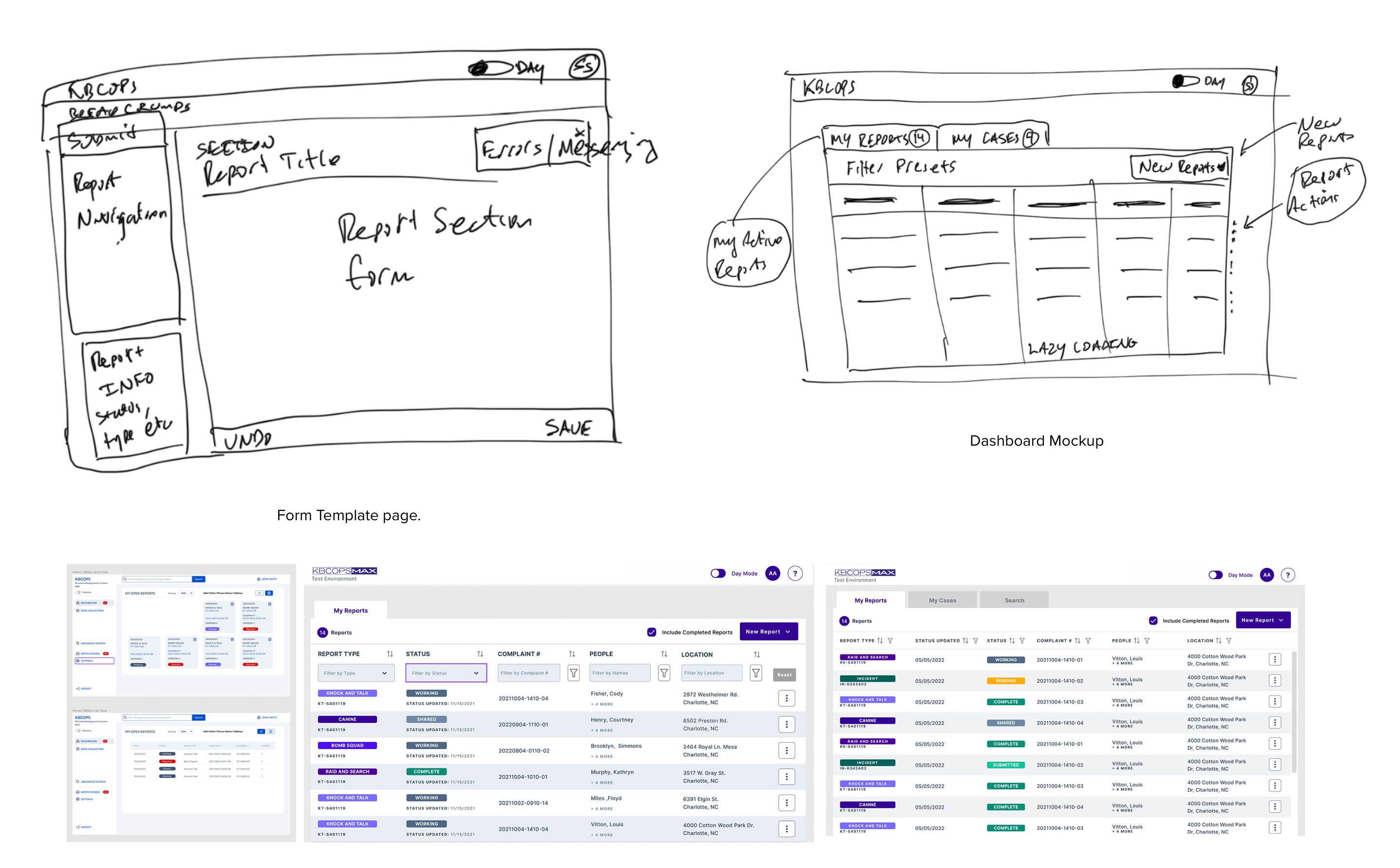
Considering the various challenges and keeping our key objectives at the forefront, I initiated the design phase by creating hand-sketched high-level concept designs. These sketches served as preliminary visual representations, allowing me to quickly explore different design approaches and layouts. This hands-on method facilitated immediate feedback from the team and provided a tangible starting point for more detailed digital mockups. It was an effective way to trajohjohnslate our research findings and objectives into actionable design solutions, setting the stage for the subsequent phases of the project.
Rudimentary hand draw ideas where the first step in getting to the final high fidelity wireframes.
Component Library
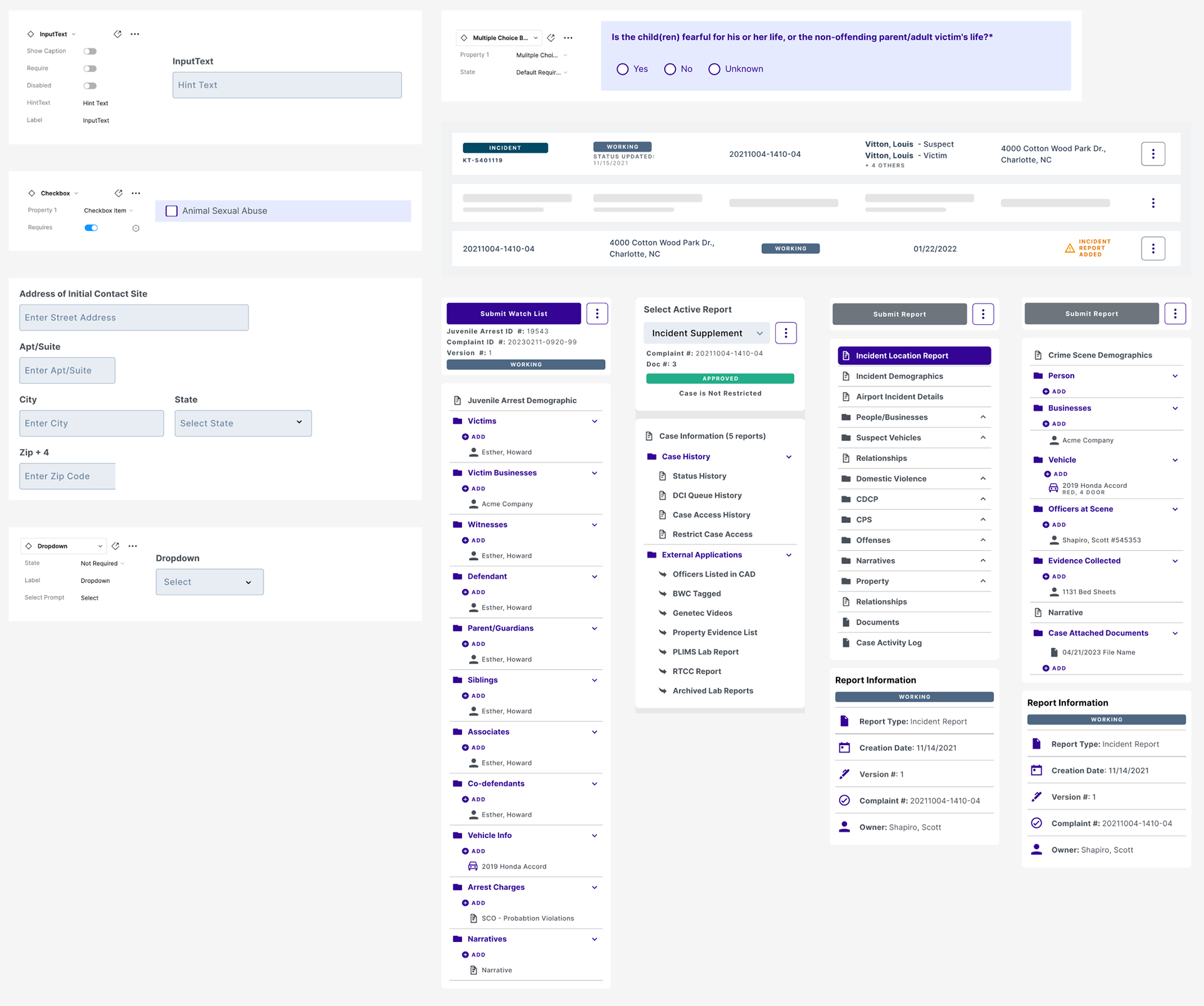
Recognizing the complexity of the project and the need for efficiency, I proposed to the team that we utilize a component library to streamline both the design and development processes. After evaluating various options, Prime Components was selected as our go-to library.
To align with the project's aesthetic and functional requirements, I crafted two customized themes for the component library: one for dark mode and another for light mode. These themes ensured a visually cohesive user interface for users working day or night time.
Taking inspiration from Atomic Design principles, I went beyond the basic components, referred to as "Atoms," to create more complex, reusable sets of components, termed "Molecules." These included specialized blocks for addresses, multiple-choice questions, and checklists. By doing so, I was able to create a highly modular and scalable design system that not only met the project's immediate needs but also provided a robust foundation for future enhancements.
Conclusion
The journey of redesigning the City of Charlotte's internal case management system was a multi-faceted endeavor that required a deep understanding of user needs, technical constraints, and organizational goals. As the Lead UX Designer, my role was not just to create visually appealing interfaces but to solve real-world problems that police officers and other key stakeholders face daily.
The Design Thinking methodology, coupled with a comprehensive research approach, allowed me to empathize with our users and understand their pain points. This was instrumental in shaping a design strategy that was both user-centric and operationally efficient. The challenges that were faced, from user feedback constraints to backend limitations, were not roadblocks but opportunities for creative problem-solving and grow as designer.
The use of modern software tools like Figma, Airtable, and JIRA, as well as the implementation of a component library, enabled us to work efficiently and maintain design consistency. The automated Figma script for form redesign was a game-changer, saving months of manual work and ensuring uniformity across the system.
By focusing on key objectives like simplifying data entry, improving report management, and creating consistent UX patterns, we were able to deliver a system that not only meets but exceeds user expectations and perform more transparently for the officers and other users. The project, however, doesn't end with the launch. It's an ongoing process of refinement and adaptation to ensure that the system continues to serve the evolving needs of the City of Charlotte's law enforcement community.
In closing, this project was more than just a redesign; it was a transformational journey that involved cross-disciplinary collaboration, user engagement, and innovative problem-solving. It stands as a testament to what can be achieved when design is leveraged not just as an aesthetic tool but as a strategic asset for organizational success.